PCHR Killings
B'Tselem Fatalities
A Brutal Routine
Science of Suicide Bombing
Settler Violence
1st Month: 28 boys, 140
08/01/2003 - 09/01/2003
10/01/2003 - 11/01/2003
11/01/2003 - 12/01/2003
12/01/2003 - 01/01/2004
01/01/2004 - 02/01/2004
02/01/2004 - 03/01/2004
03/01/2004 - 04/01/2004
04/01/2004 - 05/01/2004
05/01/2004 - 06/01/2004
06/01/2004 - 07/01/2004
08/01/2004 - 09/01/2004
09/01/2004 - 10/01/2004
10/01/2004 - 11/01/2004
11/01/2004 - 12/01/2004
12/01/2004 - 01/01/2005
01/01/2005 - 02/01/2005
02/01/2005 - 03/01/2005
03/01/2005 - 04/01/2005
04/01/2005 - 05/01/2005
06/01/2005 - 07/01/2005
07/01/2005 - 08/01/2005
08/01/2005 - 09/01/2005
11/01/2005 - 12/01/2005
12/01/2005 - 01/01/2006
01/01/2006 - 02/01/2006
02/01/2006 - 03/01/2006
03/01/2006 - 04/01/2006
04/01/2006 - 05/01/2006
05/01/2006 - 06/01/2006
06/01/2006 - 07/01/2006
07/01/2006 - 08/01/2006
08/01/2006 - 09/01/2006
09/01/2006 - 10/01/2006
10/01/2006 - 11/01/2006
11/01/2006 - 12/01/2006
04/01/2007 - 05/01/2007
05/01/2007 - 06/01/2007
09/01/2007 - 10/01/2007
01/01/2009 - 02/01/2009
02/01/2009 - 03/01/2009
03/01/2009 - 04/01/2009
10/01/2009 - 11/01/2009
11/01/2009 - 12/01/2009
12/01/2009 - 01/01/2010
01/01/2010 - 02/01/2010
02/01/2010 - 03/01/2010
03/01/2010 - 04/01/2010

Israel and Palestine
Human rights group B'Tselem determines bombing of power plant in Gaza constitutes war crime and was carried out as 'vengeance' | Ynet reporters | Published: 09.27.06, 09:24
The B’Tselem human rights group published Wednesday a report on the implications of the bombing of the power plant in Gaza on June 28th, 2006. Findings show that the majority of residents in the Gaza Strip are only intermittently connected to the power supply and that the power cut has adversely affected medical services throughout hospitals and clinics in the Strip.
The report also found that the majority of the urban population is connected to the water supply for only two to three hours a day and that the sewer system in the Strip has virtually collapsed. In addition, the mobility of many of the residents has been hindered following disruption to the elevator service and the inability to refrigerate food supplies, thus exposing many to risk of food poisoning.
According to B’Tselem, the power cut has caused severe damage to small businesses dependent on the electrical supply, and the report foresees an increasingly grave situation in the wake of the severe economic crises prevalent in the Gaza Strip.
The B’Tselem organization has determined that the IDF operation was illegal and that according to international humanitarian law it is deemed a war crime as it constitutes an attack on a clear civilian target, as well as being "a banned collective punishment." ...
Israel's cluster bomb use "outrageous": U.N. | Sep 19, 7:56 AM (ET) | By Alistair Lyon, Special Correspondent
BEIRUT (Reuters) - Israel dropped at least 350,000 cluster bomblets on south Lebanon in its war with Hizbollah guerrillas, mostly when the conflict was all but over, leaving a deadly legacy for civilians, a U.N. official said on Tuesday.
"The outrageous fact is that nearly all of these munitions were fired in the last three to four days of the war," David Shearer, the United Nations humanitarian coordinator in Lebanon, told a news conference in Beirut.
"Outrageous because by that stage the conflict had been largely resolved in the form of (U.N. Security Council) Resolution 1701," he said.
The resolution adopted on August 11 halted 34 days of fighting three days later. A truce has largely held since then.
Israel denies using cluster bombs illegally.
Shearer said Israel had not explained why it fired so many cluster bombs across the south as the war drew to a close. Nor had it responded to a U.N. request for the map coordinates of the cluster bomb strikes to hasten clearance efforts.
U.N. Emergency Relief Coordinator Jan Egeland has called Israel "completely immoral" for using them in residential areas.
The United Nations has so far identified 516 cluster bomb strike locations and says 30 to 40 percent of the bomblets they scattered over the south failed to explode at the time.
Only about 17,000 bomblets have been defused so far and the United Nations says it could take up to 30 months to destroy most of the unexploded sub-munitions. The British-based Land mine Action group has said clearing the south could take a decade.
Shearer said cluster bombs had killed or wounded an average of three people a day since the war ended, with 15 killed, including a child, and 83 wounded, of whom 23 are children. ...
18 September 2006 08:11 | Deadly harvest: The Lebanese fields sown with cluster bombs | The Independent | By Patrick Cockburn in Nabatiyeh | Published: 18 September 2006
Lebanese villagers must risk death in fields 'flooded' with more than a million Israeli cluster bombs - or leave crops to rot
The war in Lebanon has not ended. Every day, some of the million bomblets which were fired by Israeli artillery during the last three days of the conflict kill four people in southern Lebanon and wound many more.
The casualty figures will rise sharply in the next month as villagers begin the harvest, picking olives from trees whose leaves and branches hide bombs that explode at the smallest movement. Lebanon's farmers are caught in a deadly dilemma: to risk the harvest, or to leave the produce on which they depend to rot in the fields.
In a coma in a hospital bed in Nabatiyeh lies Hussein Ali Ahmad, a 70-year-old man from the village of Yohmor. He was pruning an orange tree outside his house last week when he dislodged a bomblet; it exploded, sending pieces of shrapnel into his brain, lungs and kidneys. "I know he can hear me because he squeezes my hand when I talk to him," said his daughter, Suwad, as she sat beside her father's bed in the hospital.
At least 83 people have been killed by cluster munitions since the ceasefire, according to independent monitors.
Some Israeli officers are protesting at the use of cluster bombs, each containing 644 small but lethal bomblets, against civilian targets in Lebanon. A commander in the MLRS (multiple launch rocket systems) unit told the Israeli daily Haaretz that the army had fired 1,800 cluster rockets, spraying 1.2 million bomblets over houses and fields. "In Lebanon, we covered entire villages with cluster bombs," he said. "What we did there was crazy and monstrous." What makes the cluster bombs so dangerous is that 30 per cent of the bomblets do not detonate on impact. They can lie for years - often difficult to see because of their small size, on roofs, in gardens, in trees, beside roads or in rubbish - waiting to explode when disturbed.
In Nabatiyeh, the modern 100-bed government hospital has received 19 victims of cluster bombs since the end of the war. As we arrived, a new patient, Ahmad Sabah, a laboratory technician at the hospital, was being rushed into the emergency room. A burly man of 45, he was unconscious on a stretcher. Earlier in the morning, he had gone up to the flat roof of his house to check the water tank. While there, he must have touched a pile of logs he was keeping for winter fires. Unknown to him, a bomblet had fallen into the woodpile a month earlier. The logs shielded him from the full force of the blast, but when we saw him, doctors were still trying to find out the extent of his injuries.
"For us, the war is still going on, though there was a cease-fire on 14 August," said Dr Hassan Wazni, the director of the hospital. "If the cluster bombs had all exploded at the time they landed, it would not be so bad, but they are still killing and maiming people."
The bomblets may be small, but they explode with devastating force. On the morning of the ceasefire, Hadi Hatab, an 11-year old boy, was brought dying to the hospital. "He must have been holding the bomb close to him," Dr Wazni said. "It took off his hands and legs and the lower part of his body."
We went to Yohmor to find where Hussein Ali Ahmad had received his terrible wounds while pruning his orange tree. The village is at the end of a broken road, six miles south of Nabatiyeh, and is overlooked by the ruins of Beaufort Castle, a crusader fortress on a ridge above the deep valley along which the Litani river runs.
Israeli bombs and shells have turned about a third of the houses in Yohmor into concrete sandwiches, one floor falling on top of another under the impact of explosions. Some families camp in the ruins. Villagers said that they were most worried by the cluster bombs still infesting their gardens, roofs and fruit trees. In the village street, were the white vehicles of the Manchester-based Mines Advisory Group (MAG), whose teams are trying to clear the bomblets.
It is not an easy job. Whenever members of one of the MAG teams finds and removes a bomblet, they put a stick, painted red on top and then yellow, in the ground. There are so many of these sticks that it looks as if some sinister plant had taken root and is flourishing in the village.
"The cluster bombs all landed in the last days of the war," said Nuhar Hejazi, a surprisingly cheerful 65-year-old woman. "There were 35 on the roof of our house and 200 in our garden so we can't visit our olive trees." People in Yohmor depend on their olive trees and the harvest should begin now before the rains, but the trees are still full of bomblets. "My husband and I make 20 cans of oil a year which we need to sell," Mrs Hejazi says. "Now we don't know what to do." The sheer number of the bomblets makes it almost impossible to remove them all.
Frederic Gras, a de-mining expert formerly in the French navy, who is leading the MAG teams in Yohmor, says: "In the area north of the Litani river, you have three or four people being killed every day by cluster bombs. The Israeli army knows that 30 per cent of them do not explode at the time they are fired so they become anti-personnel mines."
Why did the Israeli army do it? The number of cluster bombs fired must have been greater than 1.2 million because, in addition to those fired in rockets, many more were fired in 155mm artillery shells. One Israeli gunner said he had been told to "flood" the area at which they were firing but was given no specific targets. M. Gras, who personally defuses 160 to 180 bomblets a day, says this is the first time he seen cluster bombs used against heavily populated villages.
An editorial in Haaretz said that the mass use of this weapon by the Israeli Defence Forces was a desperate last-minute attempt to stop Hizbollah's rocket fire into northern Israel. Whatever the reason for the bombardment, the villagers in south Lebanon will suffer death and injury from cluster bombs as they pick their olives and oranges for years to come.
The war in Lebanon has not ended. Every day, some of the million bomblets which were fired by Israeli artillery during the last three days of the conflict kill four people in southern Lebanon and wound many more.
The casualty figures will rise sharply in the next month as villagers begin the harvest, picking olives from trees whose leaves and branches hide bombs that explode at the smallest movement. Lebanon's farmers are caught in a deadly dilemma: to risk the harvest, or to leave the produce on which they depend to rot in the fields.
In a coma in a hospital bed in Nabatiyeh lies Hussein Ali Ahmad, a 70-year-old man from the village of Yohmor. He was pruning an orange tree outside his house last week when he dislodged a bomblet; it exploded, sending pieces of shrapnel into his brain, lungs and kidneys. "I know he can hear me because he squeezes my hand when I talk to him," said his daughter, Suwad, as she sat beside her father's bed in the hospital.
At least 83 people have been killed by cluster munitions since the ceasefire, according to independent monitors.
Some Israeli officers are protesting at the use of cluster bombs, each containing 644 small but lethal bomblets, against civilian targets in Lebanon. A commander in the MLRS (multiple launch rocket systems) unit told the Israeli daily Haaretz that the army had fired 1,800 cluster rockets, spraying 1.2 million bomblets over houses and fields. "In Lebanon, we covered entire villages with cluster bombs," he said. "What we did there was crazy and monstrous." What makes the cluster bombs so dangerous is that 30 per cent of the bomblets do not detonate on impact. They can lie for years - often difficult to see because of their small size, on roofs, in gardens, in trees, beside roads or in rubbish - waiting to explode when disturbed. ...
Gaza: The children killed in a war the world doesn't want to know about | By Donald Macintyre In Rafah | Published: 19 September 2006
...
Jihad Abu Snaima was just the most recent of more than 37 children and teenagers under 18 killed [out of a total death toll, including militants, of 228] in the operations mounted by the Israeli military in Gaza since 25 June, according to figures from the Palestinian Centre of Human Rights (PCHR).
Of these, the PCHR classifies 151 as "civilian", although beside non-combatants and bystanders, that total also includes militants or faction members not involved in operations against Israel at the time for example those deliberately targeted in Israeli air strikes because of their involvement in previous attacks. The Israel Defence Forces have always maintained that being under 18 does not automatically exclude a person from taking part in action against them. ...
...
Names of children under the age of 18 killed during the operations mounted by the Israeli military in Gaza since 25 June, according to the Palestinian Centre of Human Rights
Bara Nasser Habib, 3 (hit by shrapnel to the head and body, Gaza City, 26 July)
Shahed Saleh Al-Sheikh Eid, 3 days old (bled to death after airstrike, Al-Shouka, 4 August)
Rajaa Salam Abu Shaban, 3 (died of fractured skull in air raid, Gaza City, 9 August)
Jihad Selmi Abu Snaima, 14 (killed by a shell, Al-Shoukha, 10 september)
Khaled Nidal Wahba, 15 months (died of wounds from an airstrike, 10 July)
Rawan Farid Hajjaj, 6 (killed with his mother and sister in an airstrike, Gaza City, 8 July)
Anwar Ismail Abdul Ghani Atallah, 12 (shot in the head, Erez, 5 July)
Shadi Yousef Omar 16 (shot in the chest by IDF, Beit Lahya, 7 July)
Mahfouth Farid Nuseir, 16 (killed by missile while playing football, Beit Hanoun, 11 July)
Ahmad Ghalib Abu Amsha, 16, (killed by missile while playing football, Beit Hanoun, 11 July)
Ahmad Fathi Shabat, 16 (killed by missile while playing football, Beit Hanoun, 11 July)
Walid Mahmoud El-Zeinati, 12 (died of shrapnel wounds, Gaza City, 11 July)
Basma Salmeya, 16 (killed in Israeli airstrike, 12 July, Jabalia)
Somaya Salmeya, 17 (killed in Israeli airstrike, 12 July, Jabalia)
Aya Salmeya, 9 (killed in Israeli airstrike, Jabalia, 12 July)
Yehya Salmeya, 10 (killed in Israeli airstrike, Jabalia, 12 July)
Nasr Salmeya, 7 (killed in Israeli airstrike, Jabalia, 12 July)
Huda Salmeya, 13 (killed in Israeli airstrike, Jabalia, 12 July)
Eman Salmeya, 12 (killed in Israeli airstrike, Jabalia, 12 July)
Raji Omar Jaber Daifallah, 16 (died of shrapnel wounds from missile, Gaza City, 13 July)
Ali Kamel Al-Najjar, 16 (killed by Israeli tank shell, Al-Maghazi refugee camp, 19 July)
Ahmed Ali Al-Na'ami, 16 (killed by Israeli tank shell, Al-Maghazi refugee camp, 19 July)
Ahmed Rawhi Abu Abdu, 14 (killed by drone missile, Al Nusairat refugee camp, 19 July)
Mohammed 'awad Muhra, 14 (killed by Israeli bullet to the chest, Al-Maghazi refugee camp, 20 July)
Fadwa Faisal Al-'arrouqi, 13 (died from shrapnel wounds, Gaza City, 20 July)
Saleh Ibrahim Nasser, 14 (killed by artillery fire, Beit Hanoun, 24 July)
Khitam Mohammed Rebhi Tayeh, 11 (killed by artillery fire, Beit Hanoun, 24 July)
Ashraf 'abdullah 'awad Abu Zaher, 14 (shot in the back, Khan Younis, 25 July)
Nahid Mohammed Fawzi Al-Shanbari, 16 (killed by artillery fire, Beit Hanoun, 31 July)
'aaref Ahmed Abu Qaida, 14 (killed by artillery fire, Beit Hanoun, 1 August)
Anis Salem Abu Awad, 12 (killed by airstike, Al-Shouka, 2 August)
Ammar Rajaa Al-Natour, 17 (killed by drone missile, Al Shouka, 5 August)
Kifah Rajaa Al-Natour, 15 (killed by drone missile, Al Shouka, 5 August)
Ibrahim Suleiman Al-Rumailat, 13 (killed by drone missile, Al Shouka, 5 August)
Ahmed Yousef 'abed 'aashour, 13 (killed by missile fire, Beit Hanoun, 14 August)
Mohammed 'abdullah Al-Ziq, 14 (killed by drone missile, Gaza City, 29 August)
Nidal 'abdul 'aziz Al-Dahdouh, 14 (killed by rifle fire, Gaza City, 30 August)
Jihad Selmi Abu Snaima, 14 (killed by artillery fire, Rafah, 10 September
Lebanon to seek Israel compensation over oil slick
by Salim Yassin Mon Sep 11, 12:22 PM ET
BEIRUT (AFP) - Lebanon is planning legal action against Israel for an oil slick caused by its bombing of a power station that has polluted large areas of the Lebanese coast, a minister has told AFP.Lebanese Environment Minister Yacoub Sarraf said his government would seek damages under a statute of the International Court of Justice (ICJ).
The legal clause states that "an intentional attack with the certainty that this attack will create widespread environmental damage in the long-run can constitute a war crime".
The Israeli military bombed Lebanon's southern Jiyeh power plant in mid-July during its 34-day offensive against Hezbollah militants, unleashing thousands of tonnes of fuel oil into the Mediterranean Sea.
"The bombardment caused a lot of long-term damage because layers of oil settled on the sea bed" or drifted below the surface, Sarraf said in an interview.
"There are four to five sites of underwater layers which, if they are not treated, are likely to reappear and recontaminate the coast for years to come," said the Lebanese environment minister.
"The oil slick has affected the ecosystem of the Mediterranean, with Lebanese waters being a passage for migrating schools of fish, particularly tuna," he added.
14:20 12/09/2006 | IDF commander: We fired more than a million cluster bombs in Lebanon | By Meron Rappaport
What we did was insane and monstrous, we covered entire towns in cluster bombs," the head of an IDF rocket unit in Lebanon said regarding the use of cluster bombs and phosphorous shells during the war.
Quoting his battalion commander, the rocket unit head stated that the IDF fired around 1,800 cluster bombs, containing over 1.2 million cluster bomblets.
In addition, soldiers in IDF artillery units testified that the army used phosphorous shells during the war, widely forbidden by international law. According to their claims, the vast majority of said explosive ordinance was fired in the final 10 days of the war.
The rocket unit commander stated that Multiple Launch Rocket System (MLRS) platforms were heavily used in spite of the fact that they were known to be highly inaccurate.
MLRS is a track or tire carried mobile rocket launching platform, capable of firing a very high volume of mostly unguided munitions. The basic rocket fired by the platform is unguided and imprecise, with a range of about 32 kilometers. The rockets are designed to burst into sub-munitions at a planned altitude in order to blanket enemy army and personnel on the ground with smaller explosive rounds.
The use of such weaponry is controversial mainly due to its inaccuracy and ability to wreak great havoc against indeterminate targets over large areas of territory, with a margin of error of as much as 1,200 meters from the intended target to the area hit.
The cluster rounds which don't detonate on impact, believed by the United Nations to be around 40% of those fired by the IDF in Lebanon, remain on the ground as unexploded munitions, effectively littering the landscape with thousands of land mines which will continue to claim victims long after the war has ended. ...
Poisonous clouds of pollution spread after Israel air strike | Lebanese minister says damage was deliberate, causing 'an even bigger disaster than the war itself' | By Geoffrey Lean, Environment Editor | Published: 10 September 2006
More people will die as a result of pollution unleashed by Israel's bombing of the Lebanon than perished in the month-long war itself, the Lebanese government believes.
Yacoub Sarraf, its Environment Minister, speaking exclusively to The Independent on Sunday, said last week that a highly poisonous cloud spread over a third of the country - an area that is home to half its people - from a fire in a bombed fuel tank that burned for 12 days.
The same bombing released about four million gallons of oil into the sea, in the largest ever spill in the eastern Mediterranean. He insists that the environmental damage was "deliberately" caused. Experts say that, if this was so, it would constitute a war crime, in breach of both the Geneva Convention and the statute of the International Criminal Court. Israel retorts that any such suggestion is "very ridiculous".
The damage began on 13 July, when Israeli rockets hit a fuel storage tank at the Jiyyeh power station 18 miles south of Beirut. The government managed to repair the damage and prevent an oil spill. But two days later, he continued, the rockets returned, not merely hitting the same tank again - just 25 metres from the sea - but fatally damaging its protective burm, a concrete and earth barrier designed to stop any oil spilling from the tank from reaching the Mediterranean.
"It was definitely deliberate.," he said. "They did not hit the power station, just the fuel storage, and this was the tank that was closest to the sea." ...
Gaza doctors encounter 'unexplained injuries' | By Donald Macintyre in Gaza | Published: 04 September 2006
Doctors in Gaza are reporting what they say are unexplained injuries among the dead and wounded in operations by the Israeli military, which have killed more than 200 Palestinians in the past nine weeks.
The World Health Organisation (WHO) is considering whether there is a case for an investigation into the injuries amid suspicions by the medics that the injuries were inflicted by what they claim may have been unidentified "non-conventional" weapons.
Beside especially severe burning "down to the bones", the doctors say that, in other cases, internal organs have been ruptured without any obvious sign of shrapnel wounds.
While a report from the Hamas-run Ministry of Health said the injuries raised the possibility Israel could be using "unprecedented" projectiles with "radiant" substances, the medics acknowledge that there is no proof so far of their claims. They also admit that the difficulty of establishing the exact cause of death is greatly exacerbated by the reluctance of most bereaved Palestinian families to allow autopsies.
Dr Juma al Saqqa, the director of public relations at Shifa Hospital, said the type of injuries presented by some victims were "very strange" and added: "We think this should be studied. In some cases we have opened the abdomen and found very fragmented organs." He said this was despite X-rays showing no shrapnel lodged in the patients' bodies. He said one, unsubstantiated suggestion by sympathetic doctors consulted in Italy was that some injuries might have been caused by phosphorus.
The concerns were aired at the weekend by a group of Palestinian medics during a visit to Gaza by a delegation from Physicians for Human Rights - Israel (PHR). The delegation agreed to take away fragments of tissue from the bodies of Palestinians killed during the recent military operations in Gaza for possible analysis in Israel but urged the medics to seek an international investigation. ...
Israel: Beyond Good and Evil?- by Justin Raimondo: "September 1, 2006 | Ehud Olmert's Nietzschean foreign | policy | by Justin Raimondo
The viciousness of the Israeli assault on Lebanon is underscored by the IDF's use of cluster bombs against civilian targets. As Jan Egeland, who heads up humanitarian operations for the United Nations, put it:
"What's shocking – and I would say to me completely immoral – is that 90% of the cluster bomb strikes occurred in the last 72 hours of the conflict, when we knew there would be a resolution. Every day people are maimed, wounded, and are killed by these ordnance."
As close to a million refugees return to their homes, 100,000 unexploded cluster bombs – most of them dropped by the Israelis in the closing hours of the war – lie in wait for them and their children. Kids often pick up such ordnance because of its resemblance to toys. Such is the sickening legacy of the Israeli aggression, which will continue to deal death long after "peace" is declared.
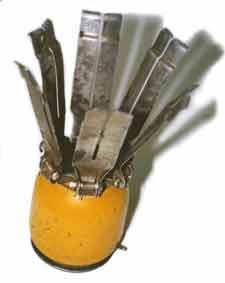
The Israelis, for their part, defend their use of cluster bombs. Israeli government spokeswoman Miri Eisin philosophized that, while war is "regrettable," dropping the widely condemned ordnance on civilian targets in Lebanon was perfectly legal:
"Israel does not break any international laws in the type of armaments it uses. Their use conforms with international standards."
Eisin, you'll note, didn't even attempt a moral defense of the IDF's murderously cruel tactics: the Israelis long ago ceded the moral high ground and retreated behind a veritable Wall of Separation, beyond good and evil. The spirit of what might be called their Nietzschean foreign policy was well expressed in Israeli UN Ambassador Dan Gillerman's reply to those who decried Israel's response to the kidnapping of two soldiers as wildly disproportionate: "You're damned right this is disproportionate!" ...

